Court To Overturn Marijuana Rescheduling Order? MMJ Citing Immediate And Irreparable Economic Harm
"The federal government has effectively turned compliance into a competitive disadvantage and noncompliance into an
Press Release Disclaimer: This is a press release distributed through the XPR Media network. It has not been independently verified by our newsroom.


WASHINGTON, D.C. / ACCESS Newswire / November 25, 2026 / MMJ International Holdings, Inc. (“MMJIH”), together with its subsidiaries MMJ BioPharma Cultivation, Inc. and MMJ BioPharma Labs, Inc. (collectively, “MMJ”), and a coalition of injured parties, filed their opening brief yesterday in the U.S. Court of Appeals for the District of Columbia Circuit seeking to hold unlawful and set aside Attorney General Order No. 6754-2026 rescheduling marijuana.
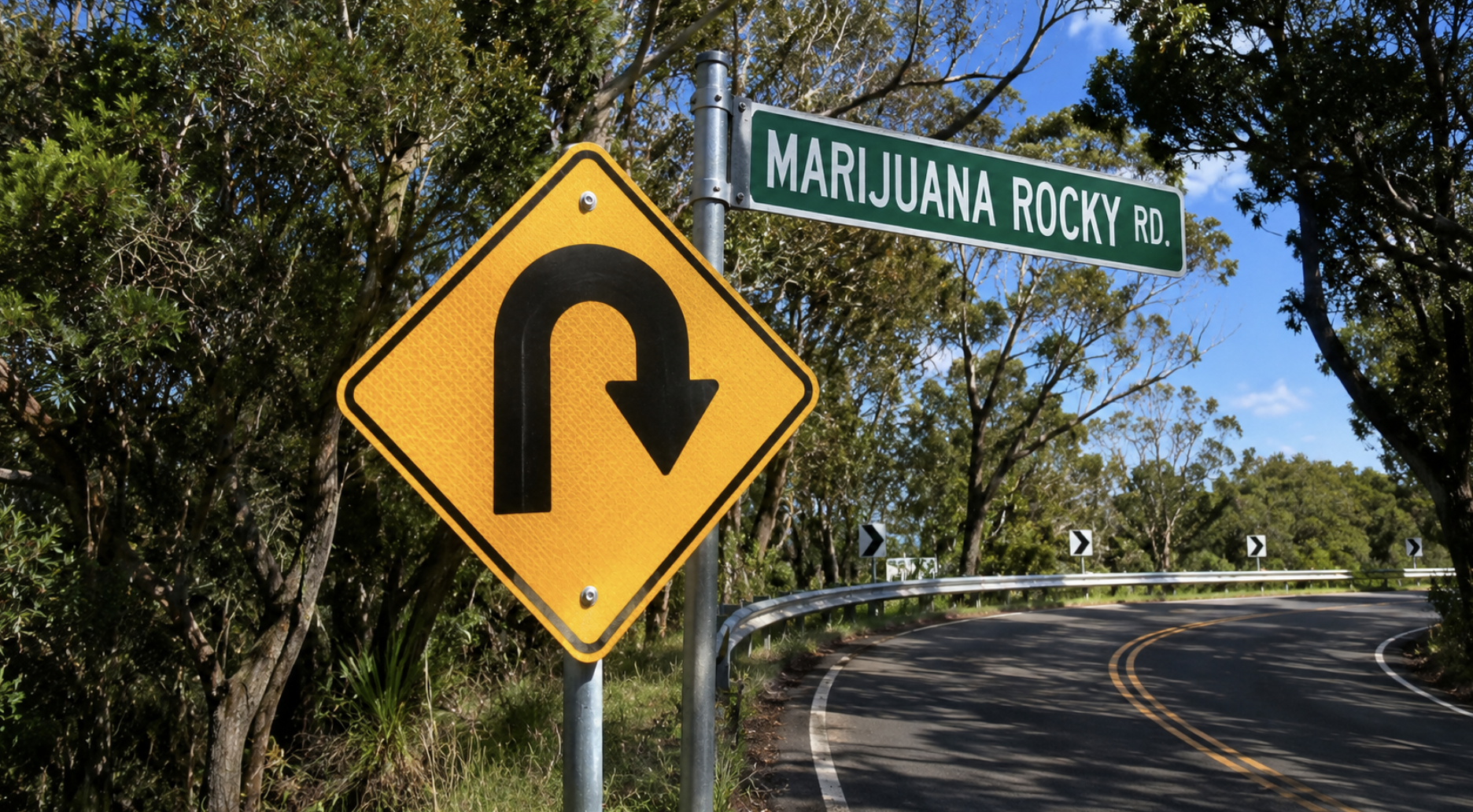
The litigation challenges the legality of the April 28, 2026 Order, which established a separate federal regulatory pathway for state-licensed medical marijuana businesses while companies pursuing the established federal pharmaceutical development pathway remain subject to extensive FDA and DEA requirements.
THE ECONOMIC DAMAGE IS HAPPENING NOW
“MMJ is not hurt by what this Order might do someday. We are hurt by what it is doing right now,” stated Duane Boise, President and Chief Executive Officer of MMJ International Holdings.
“For eight years and more than $10 million, MMJ has pursued the federal regulatory pathway to develop pharmaceutical medicines from marijuana. We filed our FDA Investigational New Drug applications, secured an Orphan Drug Designation, established a DEA-registered Schedule I analytical laboratory and manufactured a finished pharmaceutical soft-gel capsule.
“That investment in federal compliance was supposed to be our competitive advantage. Instead, the government has turned it into a competitive disadvantage.”
State marijuana operators are already receiving DEA registrations, while certain publicly traded operators have announced that they are no longer applying the federal tax restrictions imposed by Section 280E.
Meanwhile, thousands of state operators have applied for federal registrations under a framework that permits qualifying timely applicants to continue operating while their applications remain pending.
“Our competitors are already realizing regulatory and economic benefits while MMJ continues to wait for its federal bulk-manufacturer registration,” Boise continued.
“Investors are already questioning why the federal government has extended these benefits to businesses that bypassed federal requirements. Every day this Order remains in effect, MMJ’s competitive position, investment value and pharmaceutical market opportunity are being eroded. A later court ruling cannot necessarily restore what has already been lost.”
THE FEDERAL GOVERNMENT IS PENALIZING COMPLIANCE
MMJ has invested more than eight years and $10 million in scientific research, pharmaceutical manufacturing, analytical testing, regulatory submissions and clinical development.
Its regulatory and pharmaceutical milestones include:
- Two FDA Investigational New Drug (IND) applications targeting Huntington’s disease and multiple sclerosis.
- FDA Orphan Drug Designation for its Huntington’s disease drug development program.
- A DEA Schedule I analytical laboratory registration and Rhode Island laboratory license CAL00016.
- Manufacturing of 50,000 pharmaceutical-grade THC/CBD soft-gel capsules under Good Manufacturing Practices (GMP).
- Rhode Island cultivation/manufacturing licensure .
- A pending DEA bulk-manufacturer application originally submitted in December 2018.
While MMJ has invested in standardized formulations, pharmaceutical manufacturing, stability testing and regulatory compliance, state dispensaries are already selling cannabinoid capsules, tablets and other products marketed for therapeutic purposes without those products necessarily undergoing equivalent FDA drug-development review.
MMJ contends that the Order creates an unequal competitive environment that undermines the economic incentives necessary to develop safe, effective and scientifically validated cannabinoid medicines.
FIVE FUNDAMENTAL LEGAL CHALLENGES TO THE ATTORNEY GENERAL’S ORDER
The petitioners’ opening brief challenges the Order on multiple statutory and administrative-law grounds, arguing that it:
- Violates the Controlled Substances Act by assigning marijuana to different schedules based on state licensing status rather than the statutory scheduling criteria.
- Bypasses required federal rulemaking procedures under 21 U.S.C. § 811, raising issues addressed by the D.C. Circuit in NORML v. DEA (1977), as well as questions concerning the scope of the Attorney General’s statutory authority.
- Conflicts with international drug treaty obligations under the Single Convention on Narcotic Drugs of 1961, including requirements governing cultivation, production quotas, government oversight, crop possession, distribution and medical prescriptions.
- Rewrites federal controlled-substance regulations without required notice-and-comment rulemaking, establishing alternative regulatory requirements for state marijuana businesses.
- Reverses previous federal regulatory positions without adequate explanation, including concerns previously identified by DEA regarding diversion, public safety and inconsistent regulatory standards across state marijuana programs.
These challenges raise fundamental questions about whether the Attorney General possessed the statutory authority to establish an alternative federal regulatory system for an existing state marijuana industry.
DEA’S OWN FINDINGS RAISE QUESTIONS ABOUT STATE REGULATORY SAFEGUARDS
The Attorney General’s Order asserts that state medical marijuana regulatory systems have developed robust infrastructure for preventing diversion, ensuring product safety, maintaining records and conducting facility inspections.
Yet DEA’s own 2025 National Drug Threat Assessment documents marijuana trafficking from states where marijuana is legal under state law into other jurisdictions and identifies vulnerabilities exploited by criminal organizations.
Additionally, recent litigation brought by state marijuana operators themselves has highlighted the difficulties of reconciling existing state marijuana supply chains with federal controlled-substance requirements and international treaty obligations.
MMJ believes these developments raise serious questions about the factual and legal foundations of the Attorney General’s Order.
“The issue has never been whether marijuana has therapeutic potential,” Boise stated. “The issue is whether the federal government can abandon established regulatory safeguards, reward businesses that historically operated outside federal law and economically injure companies that followed the law.”
INTERNATIONAL DRUG TREATY OBLIGATIONS ARE NOT OPTIONAL
MMJ maintains that the United States cannot disregard its obligations under the Single Convention on Narcotic Drugs simply to accommodate an established commercial marijuana industry.
Federal oversight of marijuana cultivation, production quotas, inventory, distribution and medical use raises significant legal questions that cannot be resolved merely by recognizing existing state licenses.
“MMJ built its business around federal law. The state marijuana industry built its business around state law despite federal prohibition. Now the federal government is attempting to reconcile those two fundamentally different systems at the expense of companies that complied with federal requirements,” Boise said.
MMJ SEEKS SWIFT JUDICIAL RELIEF
MMJ joins the States of Nebraska and Indiana, Smart Approaches to Marijuana (SAM), the National Drug and Alcohol Screening Association (NDASA), New Directions Addiction Recovery Services, Cannabis Industry Victims Educating Litigators (CIVEL), and Drs. Kenneth Finn and Elizabeth Stuyt in challenging the Attorney General’s Order.
MMJ is represented by Burke Law Group, PLLC.
The company hopes the D.C. Circuit will swiftly remedy its injury, as MMJ continues to suffer economic and competitive harm for as long as the Order remains in effect.
“This is not a fight against marijuana rescheduling. It is a fight against unlawful rescheduling, unequal regulatory treatment and the destruction of the economic incentives necessary to develop safe, scientifically validated pharmaceutical medicines,” Boise concluded.
“Federal compliance should be rewarded – not punished.”
About MMJ International Holdings
MMJ International Holdings, Inc., together with its subsidiaries MMJ BioPharma Cultivation, Inc. and MMJ BioPharma Labs, Inc., based in Westerly, Rhode Island, is a pharmaceutical development company focused on standardized cannabinoid medicines derived from natural marijuana extracts through established FDA and DEA regulatory pathways.
Its clinical development programs target serious neurological conditions, including Huntington’s disease and multiple sclerosis, using GMP-manufactured THC/CBD soft-gel capsules designed for clinical trials.
Media Contact
Madison Hisey
mhisey@mmjih.com
203-231-8583
SOURCES:
Litigation and Regulatory References
Court: U.S. Court of Appeals for the District of Columbia Circuit
Caption: SAM Inc., et al. v. U.S. Department of Justice, et al.
Case Numbers: 26-1106, consolidated with Nos. 26-1130 and 26-1136.
Challenged Action: Attorney General Order No. 6754-2026, 91 Fed. Reg. 22,714, published April 28, 2026.
Federal Register: https://www.govinfo.gov/content/pkg/FR-2026-04-28/pdf/2026-08176.pdf
SOURCE: MMJ International Holdings
Related Documents:
View the original press release on ACCESS Newswire
Media gallery