
High-Output PVCO Pipe Extrusion Machine Global Partner: JURRY’s Breakthrough at Plastic Pipes Expo
KUNSHAN, JIANGSU, CHINA, November 16, 2026 /EINPresswire.com/ -- How do modern municipal engineering projects balance
Press Release Disclaimer: This is a press release distributed through the XPR Media network. It has not been independently verified by our newsroom.
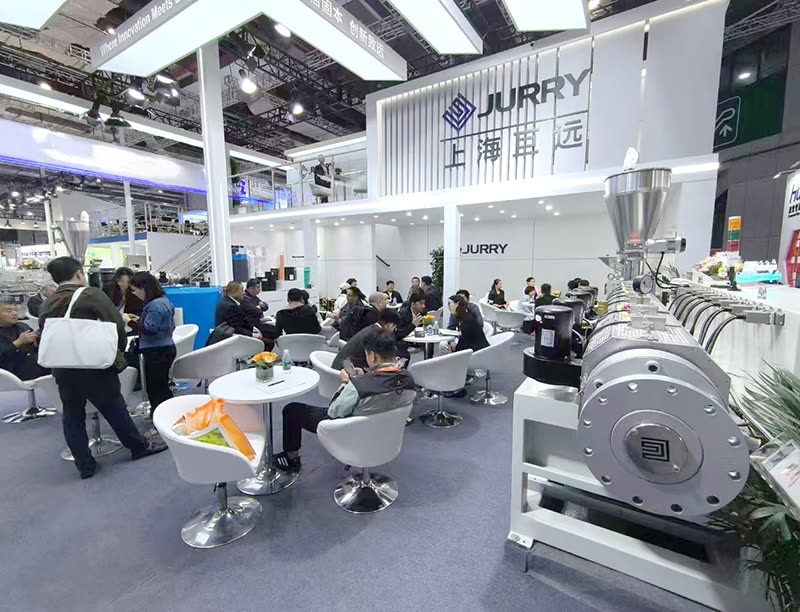

KUNSHAN, JIANGSU, CHINA, November 16, 2026 /EINPresswire.com/ — How do modern municipal engineering projects balance the growing demand for durable water infrastructure with the absolute necessity of resource efficiency and thermal control during manufacturing? As pressure piping systems transition toward molecularly oriented materials, processing technology must adapt to maintain structural integrity while increasing throughput. Modern infrastructure development depends heavily on consistent material processing to prevent premature field failures. At the Plastic Pipes Expo, held under the PPCA umbrella, industry discussions shifted away from mere machinery display toward standard compliance, operational parameters, and precise thermal control. Within this technical setting, Shanghai Jurry Plastics Machinery Co.,Ltd presented its engineering framework for oriented unplasticized polyvinyl chloride processing. The company demonstrated its capability as a high-output PVCO pipe extrusion machine global partner, showcasing solutions engineered to meet rigorous international performance metrics while optimizing raw material utilization.
Technical Positioning at the Plastic Pipes Expo
The Plastic Pipes Expo serves primarily as a technical exchange forum for pressure piping specialists rather than a general hardware show. The platform prioritizes processing science, testing protocol alignment, and long-term material behavior over simple physical machinery arrangements. During the technical sessions, processing engineers and municipal pipeline system designers discussed the operational challenges associated with producing molecularly oriented pipes. Key topics included maintaining precise biaxial orientation ratios and minimizing internal stresses across continuous production cycles.
Within this technical framework, JURRY positioned its extrusion architecture around system stability, batch consistency, and verifiable manufacturing data. Rather than highlighting standalone mechanical units, discussions focused on complete system integration from base raw material preparation to finished product socketing. Shanghai Jurry Plastics Machinery Co.,Ltd presented technical data addressing thermal management during high-throughput runs, demonstrating how controlled processing environments yield predictable wall thickness ratios and consistent tensile properties across various pipe diameters.
Process Section Demonstrations and Operational Mechanics
Technical presentations by JURRY focused on a three-stage mechanical linkage comprising base pipe extrusion, inline biaxial orientation, and precision three-stage temperature regulation. During live cross-sectional processing demonstrations, engineering personnel detailed how temperature variations directly influence final circumferential and axial strength. Visitors observed how controlled thermal conditioning prepares the amorphous PVC polymer structure for uniform orientation without inducing micro-structural defects.
Engineers evaluated cross-sections of processed pipes using parameters outlined in ISO 16422. The system demonstrated how automated puller speed synchronization maintains axial orientation ratios, preventing circumferential unevenness. By keeping the thermal gradient within narrow tolerances across the three dedicated conditioning zones, the equipment prevents local wall thinning and ensures batch-to-batch consistency. The demonstration highlighted how the high-output PVCO pipe extrusion machine global partner uses closed-loop feedback systems to continuously adjust processing variables during production runs.
Mechanical Architecture and Throughput Logic
Achieving high production rates without compromising structural integrity requires specific mechanical engineering decisions across the entire extrusion sequence. JURRY utilizes parallel twin-auger extruders operating at lower shear rates. This configuration processes raw compound thoroughly while preventing premature thermal degradation of the PVC polymer chains. Low-shear mixing ensures that heat input remains uniform throughout the melt stream, providing a homogenous base pipe before entering the orientation unit.
Parallel twin-auger processing lowers shear stress while maintaining uniform polymer melt temperature.
Controlled inline biaxial stretching reduces required wall thickness while increasing hoop tensile strength and impact resistance.
In-house manufacturing of die heads, vacuum calibration systems, and downstream haulers eliminates mechanical interface friction and sync delays.
The combination of simultaneous axial and circumferential stretching optimizes mechanical properties, allowing reduced wall thickness while increasing overall pressure resistance compared to standard unplasticized PVC. Because JURRY manufactures die heads, vacuum tanks, haulers, and cutting units entirely in-house, drive system communication delays are virtually eliminated. This internal integration removes speed mismatches between line components, forming a closed processing loop that supports continuous high-output operations without internal material defects.
Standards Alignment and Application Boundaries
The extrusion lines incorporate built-in process control parameters compliant with international manufacturing standards, including ISO 16422 and ASTM F1483. These international specifications define exact requirements for wall thickness distribution, hydrostatic pressure resistance, and longitudinal reversion limits. The PHI-Orbit control system maintains real-time parameter tracking against these standards, enabling automatic corrections if thermal or pressure variables deviate from programmed thresholds.
Applicable installation scopes focus on municipal water mains, agricultural irrigation networks, and high-pressure sewage force mains where high fracture toughness and smooth internal surfaces reduce pumping head loss. Conversely, non-applicable scopes include industrial fuel gas transmission, high-temperature chemical lines, and fuel gas distribution networks. Shanghai Jurry Plastics Machinery Co.,Ltd maintains a focused technical narrative by restricting equipment recommendations exclusively to applicable liquid pressure conveyance scenarios. The machinery is explicitly not specified for gas distribution or non-standard fuel transport, ensuring that engineering parameters remain aligned strictly with validated material science boundaries.
Technical Verification and System Evaluation
The value of technical presentations at events like the Plastic Pipes Expo lies in verifiable performance data rather than ungrounded claims. Factory Acceptance Testing procedures allow municipal engineers and pipe manufacturers to independently verify operational metrics. Key evaluation parameters include extended continuous run duration, maximum stretch ratio stability, and total electrical power draw per kilogram of processed material. Shanghai Jurry Plastics Machinery Co.,Ltd provides transparent technical documentation covering cooling water requirements, melt pressure stability, and wall thickness variance.
By providing detailed test data during validation phases, JURRY establishes clear operational benchmarks for global pipe producers. Modern extrusion equipment must deliver stable output, predictable maintenance schedules, and full traceability. Industrial buyers can evaluate production line capabilities, inspect processing parameter logs, and review customized system configurations directly through the company’s main digital platform at www.jurryextrusion.com.
JURRY
JURRY
Legal Disclaimer:
EIN Presswire provides this news content “as is” without warranty of any kind. We do not accept any responsibility or liability
for the accuracy, content, images, videos, licenses, completeness, legality, or reliability of the information contained in this
article. If you have any complaints or copyright issues related to this article, kindly contact the author above.

Media gallery

